
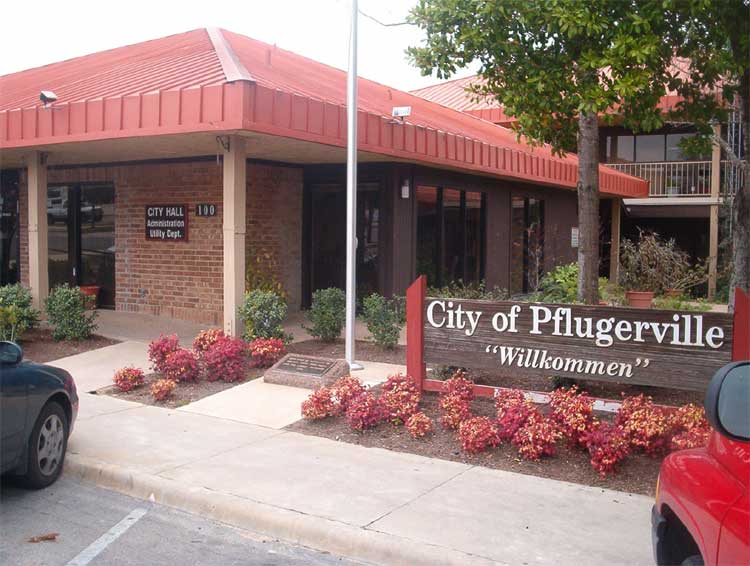

Pflugerville's proposed renewal of its Flock Safety license-plate reader contract has been delayed after privacy and data-sharing concerns pushed the city's surveillance program into a more public debate.
CBS Austin reported that the Pflugerville City Council removed a vote on a proposed two-year, $175,000 Flock Safety contract from its August 11 agenda. The city's current system includes 28 license-plate reader cameras positioned around Pflugerville.
The delay is significant because council discussion has moved beyond simply negotiating the next contract. Councilmember Jonathan Coffman told CBS Austin there is a “good chance” the city could end its relationship with Flock, citing the level of community concern and calls for removal.
According to the report, a major concern is not merely what Pflugerville police can see, but who else may be able to access information collected by the system. Residents and council members raised questions about access by other local, state and national agencies.
WLP Analysis: usefulness is not the constitutional standard
Flock and law-enforcement agencies can point to cases in which ALPR data assisted an investigation. That is relevant. It is not, by itself, a sufficient reason to normalize a system that records the movements of ordinary motorists who are suspected of no crime.
The constitutional concern is structural: government first collects location-linked information from everyone who passes a camera and only later determines whose movements may become useful to investigate. That reverses the traditional expectation that government develops individualized suspicion before intruding deeply into a person's private life.
Interagency sharing makes that concern larger. A locally approved camera network can become part of a much broader surveillance system when outside agencies are allowed to query or receive access to the data. Residents therefore have reason to ask not only how Pflugerville officers use the cameras, but how far the information travels after it is collected.
Pflugerville's delay gives the city an opportunity to answer those questions publicly before committing taxpayers to another two years of surveillance infrastructure.
What happens next
CBS Austin reported that the council is expected to revisit the issue in roughly two weeks. WLP will continue tracking the proposed contract, council action, public comments, data-sharing arrangements and the records underlying Pflugerville's Flock program.
The question before the city should be broader than whether the cameras occasionally produce useful leads: should Pflugerville maintain a system that continuously records vehicle movements when the overwhelming majority of people captured by it are not suspected of wrongdoing?
Sources
- CBS Austin — Pflugerville City Council delays Flock camera contract vote amid privacy concerns ↗
- City of Pflugerville — Safety Cameras and Automated License Plate Readers ↗
This article is original Wilco Liberty Project reporting and analysis based on the linked sources. External reporting is summarized and attributed; it is not republished.