TAYLOR, Texas — Texas Attorney General Ken Paxton has opened an investigation into whether land slated for the proposed Blueprint Projects Data Center in Taylor can legally be used for the private development after the property was conveyed more than 25 years ago with language calling for its future use as parkland.
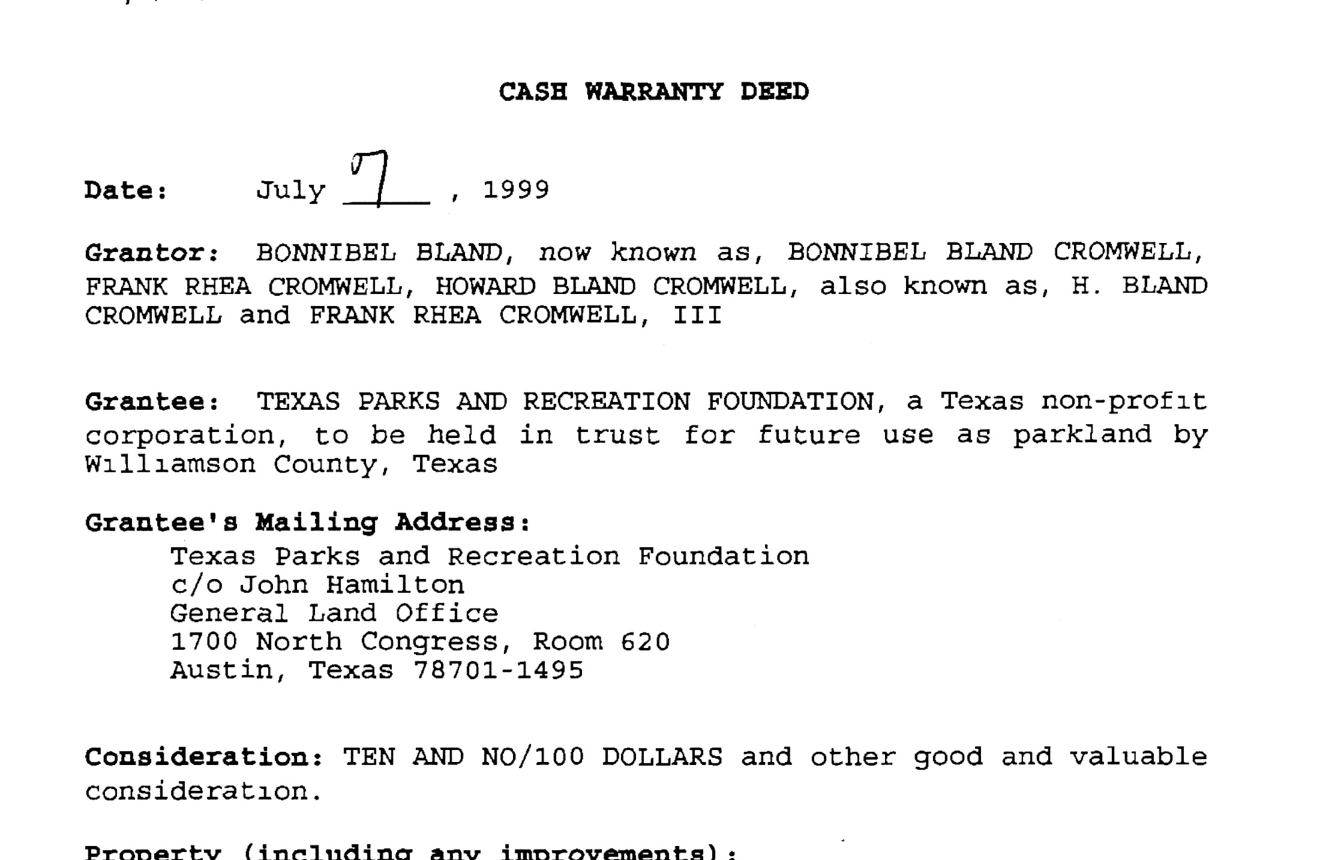
The Attorney General’s Office announced the investigation Thursday, Sept. 17. According to the state, a 1999 deed transferring the property from the Bland family to the Texas Parks and Recreation Foundation said the land was “to be held in trust for future use as parkland” by Williamson County. The transfer was made for $10.
Paxton’s office says it will investigate whether the trust or restriction referenced in that deed was ever modified, released or terminated in a manner allowed by the original instrument or otherwise required by law. The announcement does not itself determine that the current development is unlawful.
The state is examining a question Taylor has already addressed
The City of Taylor has publicly acknowledged the same 1999 language, but it has taken a different position on its legal effect. On the City’s Blueprint project page, Taylor states that the deed said the property was to be held in trust for future use as parkland, while also stating: “This was not a deed restriction.”
The City says the property later transferred to the Williamson County Park Foundation, then to the City of Taylor, and later to the Taylor Economic Development Corporation. Taylor’s public project history states that subsequent deeds did not repeat the same park-use language.
In April 2025, Taylor EDC sold the property to NCP Travis TPP Project LLC, the entity behind the Blueprint development, for $10 million. Paxton’s announcement now places the legal effect of the original 1999 language under formal state review.
The Attorney General said that if the investigation determines the property remains subject to a charitable trust or other enforceable restriction, his office will seek court intervention to prevent that restriction from being disregarded.
Paxton said his office would act if the development is found to be unlawful. The release did not announce that a lawsuit has been filed, identify a deadline for the investigation or state that the Attorney General has already reached a conclusion about the property’s legal status.
Blueprint is a major proposed development
The Blueprint Projects Data Center is planned for the southeast side of Taylor, inside Carlos G. Parker Boulevard between Martin Luther King Jr. Boulevard and the railroad tracks. The City describes the proposal as a 135,000-square-foot campus planned in three phases with an estimated total investment of $1 billion.
The project is expected to include three data-center buildings, an electrical substation, backup generators and a closed-loop cooling system. Taylor says the development could generate as much as $30 million in additional City revenue over 10 years, while nearby residents have raised concerns about land use, noise, light, environmental impacts and the project’s proximity to homes.
Taylor City Council approved the project’s Employment Center Plan in July 2025 after earlier economic-development discussions and an incentive agreement process.
A separate court fight remains relevant
The parkland issue has already reached Williamson County courts through a lawsuit filed by nearby residents Pamela Griffin, Ralph Griffin, Michelle Griffin, Corey Griffin and Polly Randle against NCP Travis TPP Project LLC. The residents argued that the 1999 deed language continued to restrict how the land could be used.
The trial court entered a final judgment in October 2025, and the residents appealed. The case is pending before Texas’ 15th Court of Appeals as Griffin et al. v. NCP Travis TPP Project LLC, case No. 15-25-00202-CV. Appellate briefing was completed earlier this year.
The Attorney General’s investigation is separate from that private lawsuit. That distinction matters because Paxton’s office is examining whether the property may still be governed by a charitable trust or other restriction that the state could seek to enforce.
What remains unanswered
The central question is now straightforward but unresolved: did the 1999 conveyance create a continuing legal obligation, and if so, was that obligation ever lawfully removed before the property was sold for private development?
The City’s public position is that the 1999 wording was not a deed restriction. The Attorney General’s Office is now investigating whether the language nevertheless created a trust or other enforceable restriction. Neither the announcement nor the City’s project page resolves that legal disagreement by itself.
Wilco Liberty Project will continue tracking the Attorney General’s investigation, the pending appeal and any new filings or public records that clarify how the parkland language was treated as the property changed hands.
Sources and References
- Texas Attorney General’s Office — Sept. 17, 2026 investigation announcement
- City of Taylor — Blueprint Projects Data Center project page and property history
- KUT — Paxton says his office is investigating proposed data center on deeded parkland in Taylor
- Texas 15th Court of Appeals docket mirror — Griffin et al. v. NCP Travis TPP Project LLC
WLP evidence classification: Confirmed government announcement and official City project records, with appellate-case background from the public docket. Legal conclusions remain unresolved.
This report distinguishes the Attorney General’s allegations and investigative purpose from the City of Taylor’s stated position and from legal conclusions that have not yet been resolved.