TAYLOR, Texas — There is a simple question Taylor officials still need to answer about Project Mustang:
Why was there such a rush?
On Aug. 18, the Taylor Planning & Zoning Commission voted to table Project Mustang for 90 days. The reason was straightforward. Commissioners wanted more information, and Taylor was already working on new regulations specifically written for data centers and other large digital-infrastructure projects.
Instead of waiting, the developers withdrew their annexation and zoning application on Sept. 3.
Then the process changed.
The City negotiated a separate development agreement with Big Watt Digital and PowerHouse Data Centers. That agreement was released publicly Oct. 2 and approved by City Council 5–0 on Oct. 8.
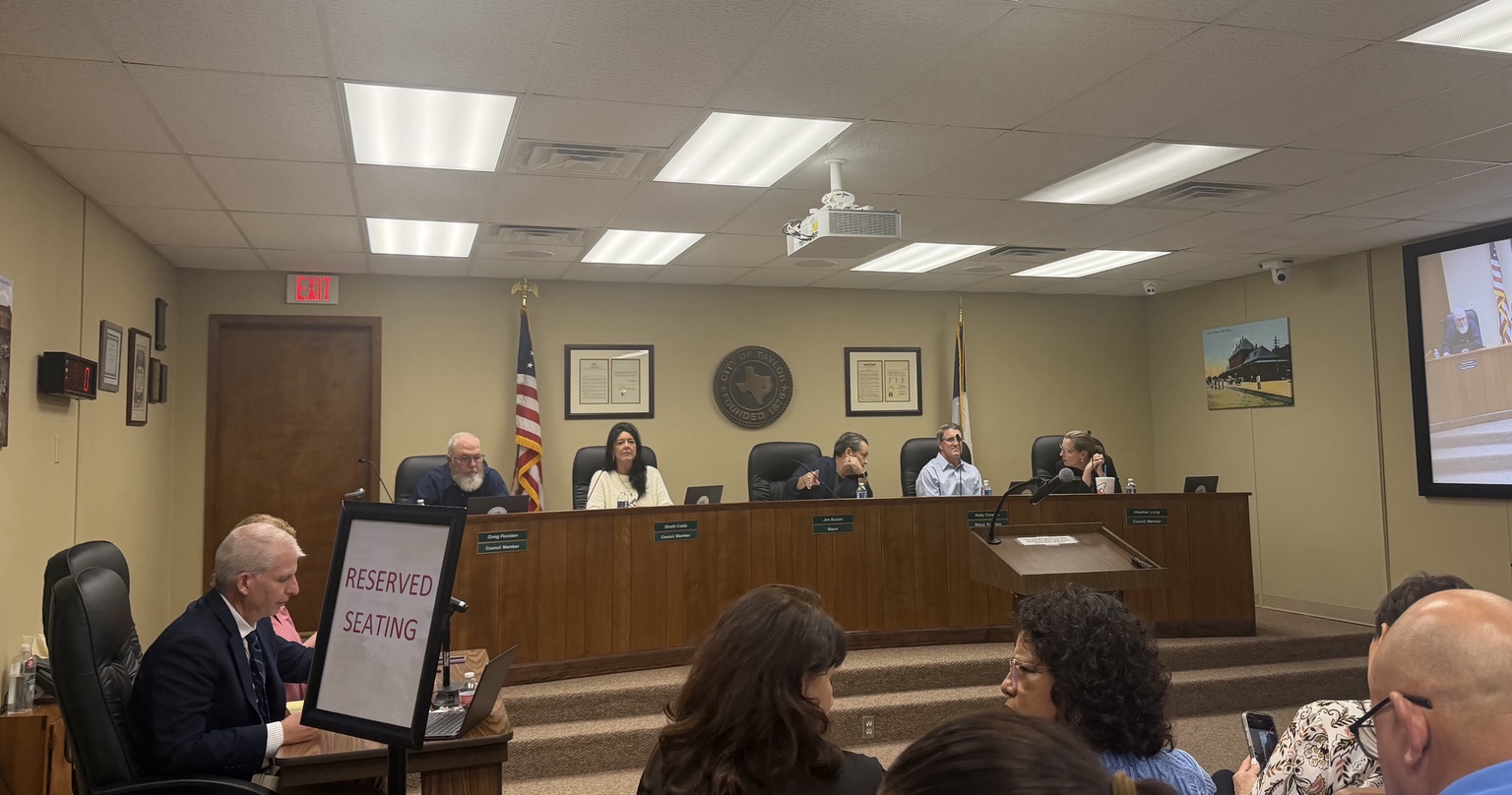
Five days later, on Oct. 13, Taylor’s Planning & Zoning Commission met while the City’s new digital-infrastructure rules were still moving through the public process.
We cannot prove that the development agreement was created specifically to avoid those new rules.
But we do not have to speculate about its effect.
Project Mustang was locked into its own negotiated rules before Taylor finished deciding what rules projects like Project Mustang should have to follow.
That is the problem.
The agreement does exactly what residents warned about
This is not simply a handshake agreement about roads, water lines and tax payments.
The development agreement contains a section titled “Vesting of Rights and Continuation of Use.”
Taylor agrees that the developer has vested authority to develop the project under the standards contained in the agreement. The document also declares the agreement the project’s “first permit” for purposes of Chapter 245 of the Texas Local Government Code.
That matters because Taylor is still writing the rules that future data centers are supposed to follow.
Even more concerning is what happens when those rules change.
The agreement says that when Taylor later adopts an amendment that is not one of the narrow categories of “Permitted Amendments,” the developer can choose to follow it if the developer decides, in its sole discretion, that the new rule is advantageous to the developer.
The agreement defines those automatically applicable “Permitted Amendments” narrowly. They include things such as updated construction codes, certain flood rules, public-works standards and utility rates.
So this should be understood clearly.
Taylor can continue writing stronger data-center rules. It can hold hearings. P&Z can debate them. Residents can show up and speak.
But many later local development rules will not automatically become Project Mustang’s rules.
That is exactly the situation residents warned Council about on Oct. 8.
Taylor was considering stronger protections
The timing becomes even harder to defend when the two sets of standards are compared.
Taylor has been developing stricter digital-infrastructure rules addressing issues such as residential setbacks, noise, low-frequency sound, utility monitoring and separation between large projects.
Now compare that with the Project Mustang agreement.
Project Mustang buildings can be 300 feet from the north, east and west property lines. Along the southern boundary, where many nearby residences are located, the agreement requires a 700-foot setback for the data center, gas plant and battery storage.
To be fair, that 700-foot southern building setback is a meaningful improvement over the earlier 300-foot concept.
But the noise standard remains a major concern.
Project Mustang is allowed to produce noise up to the greater of 65 dBA or the existing background level at the property line.
Taylor’s proposed citywide digital-infrastructure rules have been discussed with substantially lower residential limits, including separate daytime and nighttime standards and additional attention to low-frequency sound.
That matters because industrial noise is not just about how loud something sounds for a few seconds. A constant mechanical hum, turbine noise or low-frequency vibration can become a quality-of-life problem when it runs day and night.
And once again, the City Council approved Project Mustang’s standards before Taylor finished the broader rules.
Nearby homeowners carry the risk
The developers and the City spent a great deal of time talking about money.
The project presentation estimates approximately $1.38 billion in gross City tax revenue over 20 years and includes $28.2 million in community commitments.
Those are large numbers.
But money does not make industrial noise quieter.
A scholarship does not move a gas-fired power plant farther from somebody’s home.
A parks contribution does not reduce emissions.
And a nonprofit grant does not restore the rural character of an area after hundreds of acres become a massive data-center and power-generation campus.
Project Mustang is not simply a warehouse full of computers.
The agreement defines the project to include a data-center facility and a power-generation facility, along with substations, transmission and distribution equipment and other infrastructure.
The October agreement reviewed by Wilco Liberty Project also does not appear to establish the clear overall generation cap residents have repeatedly asked the City to put in writing.
This is a very large industrial development being placed next to people who were already living there.
Those families did not choose to move next to Project Mustang.
Project Mustang chose to move next to them.
That distinction should have carried more weight.
Bastrop County is showing another way to respond
There is an interesting comparison happening in Bastrop County.
Pacifico Energy is pursuing a natural-gas power project in Cedar Creek tied to a planned data-center campus. Public filings and reporting describe a project capable of producing roughly 1,300 megawatts under the larger equipment envelope now before state regulators.
Bastrop County has an even bigger limitation than Taylor: Texas counties have very little land-use authority compared with cities.
Yet on Oct. 13, the Bastrop County Commissioners Court approved a resolution asking the Texas Commission on Environmental Quality to hold a formal public meeting before acting on Pacifico’s air-permit application.
The county’s action did not approve or reject the plant. It used the authority the county does have to demand more public review and more answers about issues including air quality, infrastructure, safety and quality of life.
That is a very different posture.
Bastrop County is essentially saying: we do not have enough authority, so we are going to use the tools we have to push for more public scrutiny.
Taylor had more tools.
Taylor was already writing stronger rules.
Taylor’s own P&Z Commission had asked for 90 days.
Instead, Taylor negotiated a special agreement and vested this particular project before that process was finished.
The City’s argument deserves an answer
Taylor officials have one legitimate argument.
If the developer withdrew from Taylor’s ETJ and developed entirely under Williamson County jurisdiction, Taylor says the City would have almost no zoning authority over the project. The City argues that annexation and the development agreement give Taylor enforceable standards it otherwise would not have.
That is a real concern.
Some regulation is better than no regulation.
But that does not answer the central question.
Why approve a 20-year agreement establishing vested development rights just days before P&Z met while the City’s new digital-infrastructure rules were still being developed?
Why not let that process finish first?
Why not use the strongest proposed standards as the starting point for the Project Mustang agreement?
Why should this project be allowed to rely on a 65 dBA property-line standard while the City is considering stronger residential noise protections for future projects?
And why should a developer get the contractual ability to decide whether many future changes are advantageous before choosing to follow them?
Those are reasonable questions.
Taylor had one chance to get this right
This is what makes the Oct. 8 vote so disappointing.
Taylor did not have to reject every data center forever to protect its residents.
It simply needed to finish writing the rules before locking one of the largest projects in the area into a separate set of standards.
P&Z had already asked for time.
Residents had already asked for stronger protections.
The City was already paying consultants to write them.
Then, just as that work was reaching the public-hearing stage, Council approved a deal that gives this project vested rights under different rules.
Maybe the tax revenue will be enormous.
Maybe every promise the developers made will be kept.
Maybe the berms, setbacks and noise controls will work exactly as advertised.
But government is not supposed to base long-term land-use decisions on the hope that everything goes right.
The rules are supposed to protect people when something goes wrong.
For the residents who will live beside this project for decades, Taylor should have finished those rules first.
Sources and References
- City of Taylor — October 8, 2026 City Council agenda packet and executed/approved development-agreement materials reviewed by Wilco Liberty Project.
- October 8, 2026 Taylor City Council meeting transcript reviewed by Wilco Liberty Project.
- City of Taylor — Taylor Technology Campus project page
- City of Taylor — Data Centers in Taylor
- City of Taylor — Oct. 8, 2026 City Council agenda packet and development agreement
- Bastrop County Commissioners Court — Oct. 13, 2026 meeting
- KXAN report via AOL — Bastrop County seeks TCEQ public meeting on Pacifico project
This article is opinion and analysis based on public records, City documents, meeting transcripts and reported public actions. It should be read separately from WLP’s factual Oct. 9 meeting report.